2020
Perpetuity Longest Exposure
Regina Valkenborgh
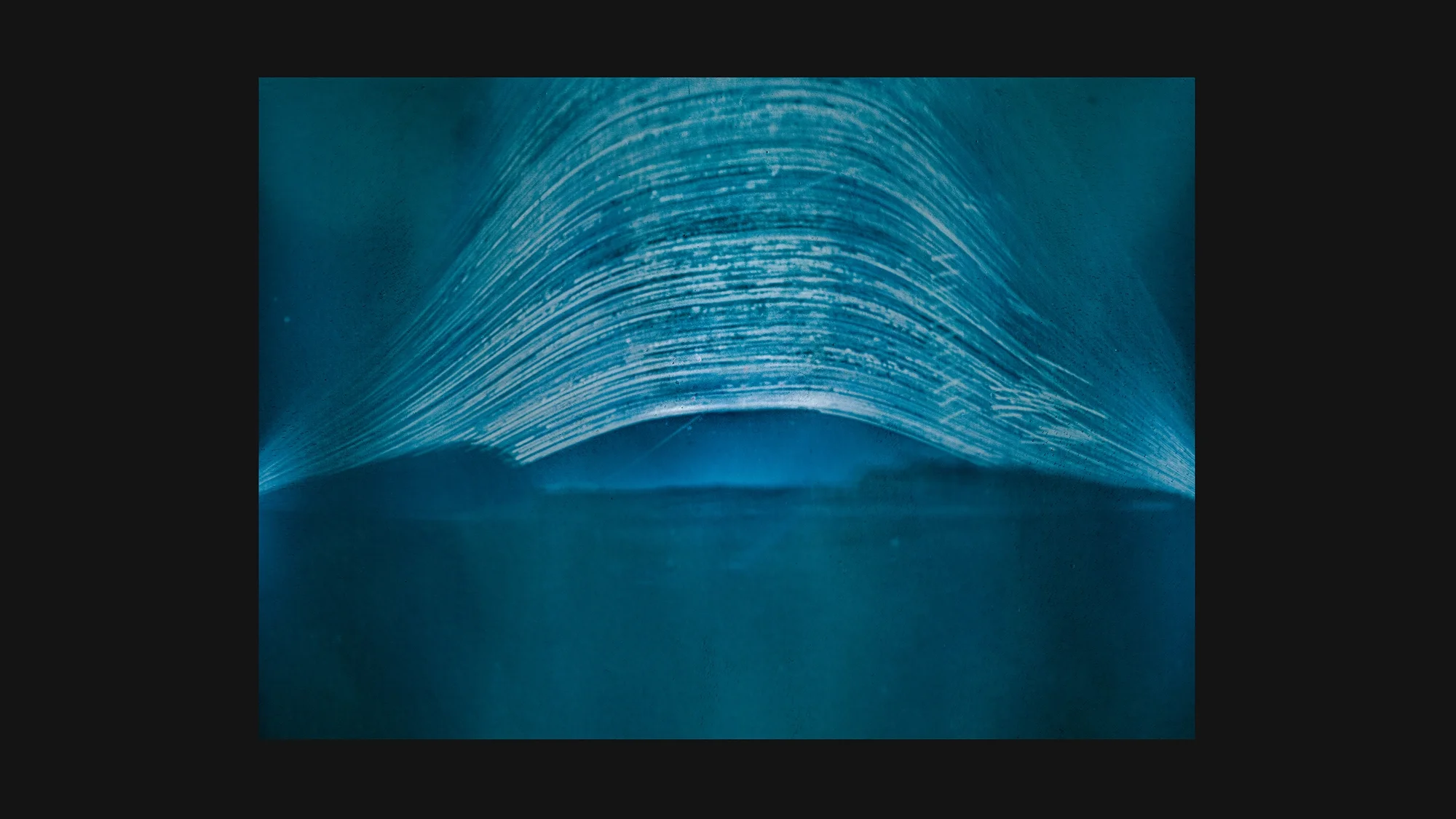
An eight-year exposure captures the essence of time in stunning solar trails.
In an extraordinary blend of art, science, and serendipity, the longest exposure in photographic history was discovered in 2020. Captured using a simple cider can pinhole camera, this eight-year exposure reveals the sun’s daily path, etched across the sky in 2,953 luminous arcs.
Artist Regina Valkenborgh had set up the camera at the Bayfordbury Observatory in 2012, but after some time, she forgot about it. It wasn’t until a technician rediscovered the camera in 2020 that this remarkable image, formed over nearly a decade, came to light.
Described as the "phenomenology of capturing light and time through the photographic process," Valkenborgh’s work employed photographic paper and natural light to create an image that compresses years into a single frame. The photograph bridges the gap between visual art and scientific inquiry, offering a unique visual revelation of the sun’s changing cycles and our planet’s rhythmic journey through space.
The forgotten camera’s survival and its eventual rediscovery only enhance the impact of this photograph, which stands as a testament to photography’s role in visualising the invisible forces of time and motion, influencing future artistic endeavours and scientific exploration alike.
FROM THE COLLECTION
A close reading of the technique, the context, and what this image establishes as a Point Zero. Read the essay
KEY REFERENCE POINTS
TECHNICAL: Cider can pinhole camera・photographic paper negative・8-year continuous exposure (2012-2020)・210×297mm original・2,953 solar arcs recorded・camera obscura method
INFLUENCE: Longest exposure in photographic history・pioneering time-compression technique・accidental discovery methodology・expanded temporal boundaries of photography・validated forgotten/autonomous image-making
ANALYTICAL: Visualises Earth's orbital rhythm・documents solar path variations・demonstrates cumulative light capture over extended duration・reveals climate patterns through arc density・proves viability of ultra-long exposures
CULTURAL IMPACT: Redefines photographic temporality・merges scientific observation with artistic practice・demonstrates serendipity in creative process・symbolic meditation on time's passage・challenges instant-image culture
ARCHIVAL RECORD
CREDIT: © Regina Valkenborgh, used with permission of the artist
AUTHOR: Regina Valkenborgh
TITLE: Perpetuity
DATE: 2020
ARCHIVE: Regina Valkenborgh
SOURCE: Regina Valkenborgh
ORIGINAL: 210 mm x 297 mm, 300 dpi
AVAILABLE INFORMATION: Captured at Bayfordbury Observatory, with a camera obscura. Digital Positive file from paper negative.
EXTENDED CONTEXT
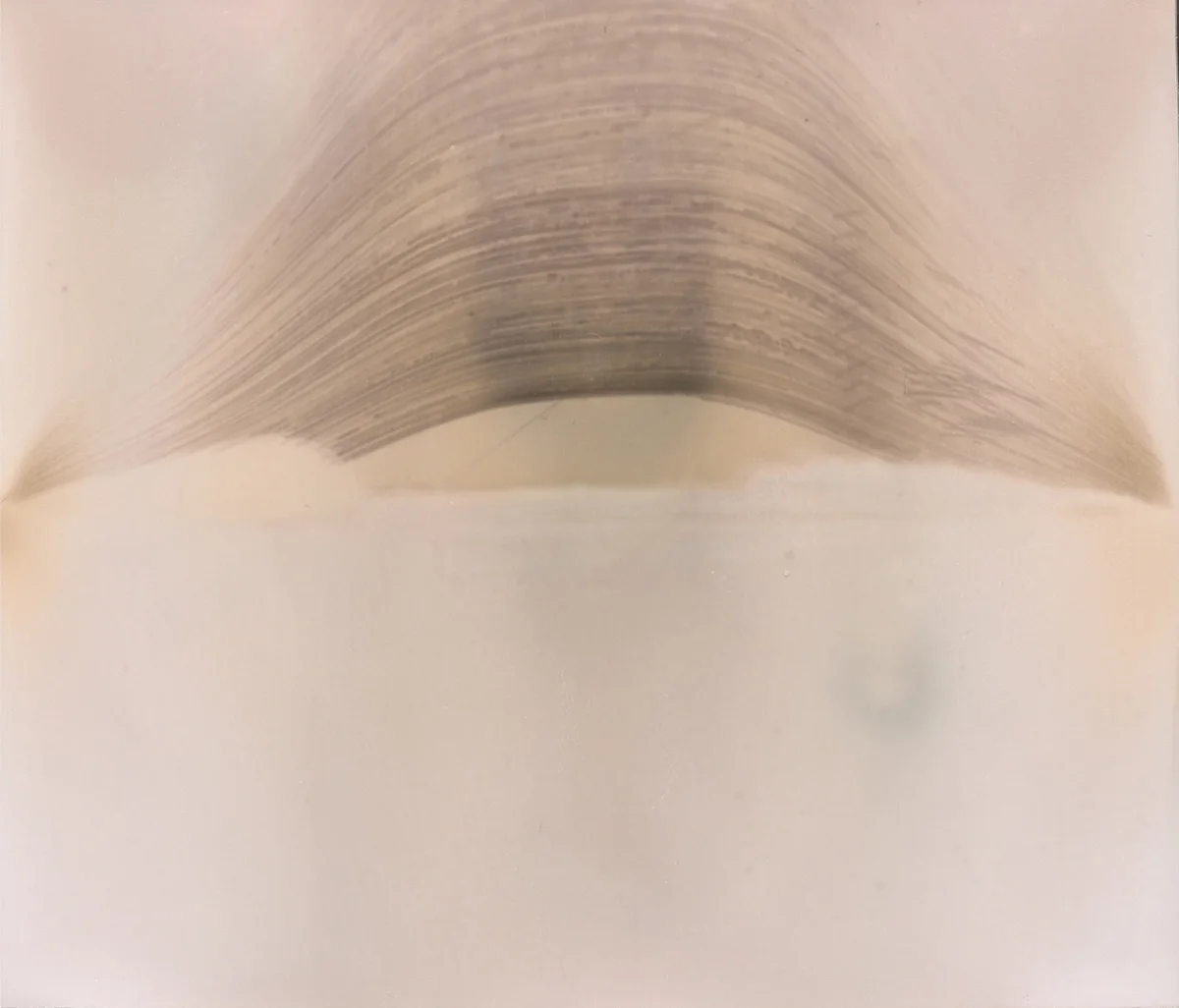
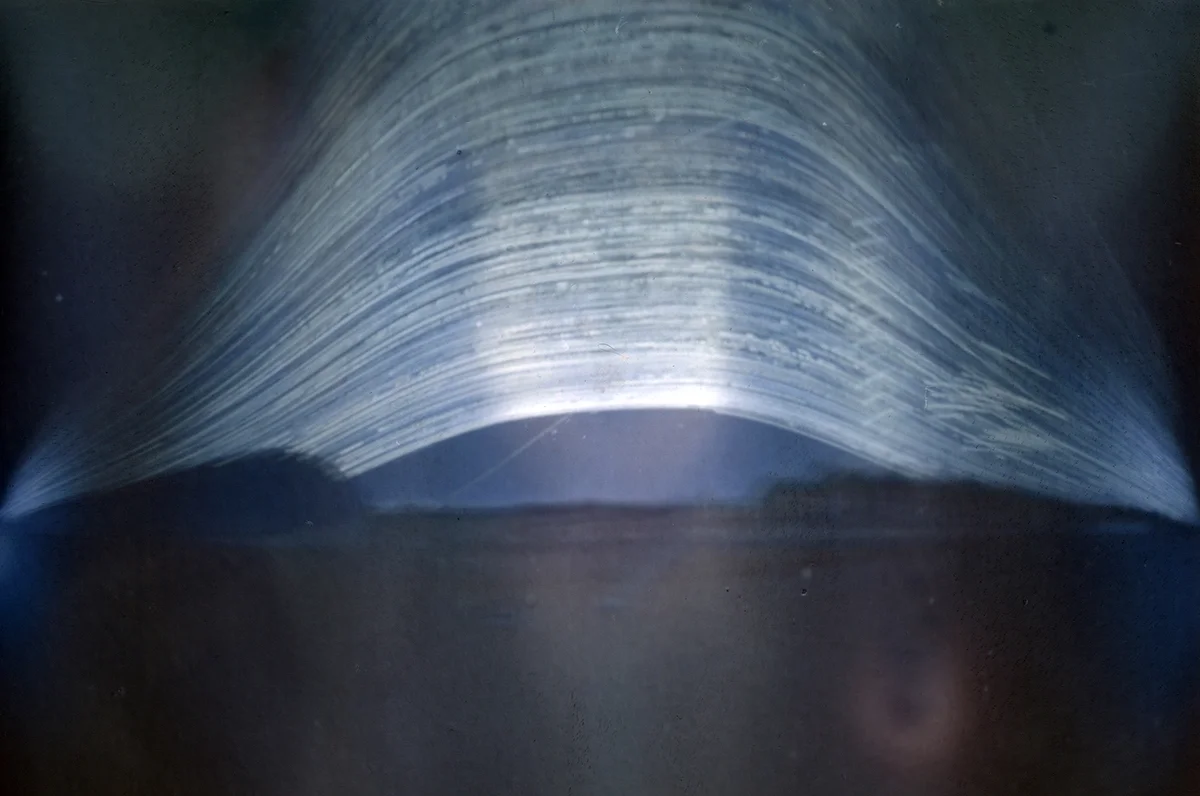
Image credit left: Perpetuity, original negative (as taken out of the can) © Regina Valkenborgh, used with permission of the artist. Image credit right: Perpetuity, simple inverted positive © Regina Valkenborgh, used with permission of the artist. https://obscura-photography.co.uk/gallery/bayfordbury-observatory-series.
Exploring the Influence of Photographing the Sun across Zero Baseline
Photographing the Sun demands a balance of extreme light control and optical precision. From the first daguerreotypes to today’s ground- and space-based observatories, each advance has refined the ability to capture its structure without overwhelming the medium. Innovations in filtration, exposure timing, and high-resolution optics have revealed layers of solar activity once beyond human reach. These images are more than records of light—they are visual datasets, enabling the study of cycles, flares, and atmospheric dynamics that shape our planet’s environment. The pursuit continues to push imaging technology toward greater clarity and resilience under the most intense illumination.
1845 HIPPOLYTE FIZEAU AND LÉON FOUCAULT – FIRST SUN PHOTO
The first daguerreotype of the Sun’s surface, marking the beginning of solar photography and opening new possibilities for celestial observation.
1851 JULIUS BERKOWSKI – SOLAR ECLIPSE
The first correctly exposed daguerreotype of the solar corona, revealing the Sun’s outer atmosphere during total eclipse.
1874 TRANSIT OF VENUS
Photographs of the transit refined astronomical measurements and demonstrated photography’s growing value for scientific observation.
2018 FIRST PHOTO INSIDE SUN CORONA
NASA’s Parker Solar Probe returned the first images from within the Sun’s corona, offering unprecedented views of its outer atmosphere.
2020 REGINA VALKENBORGH - PERPETUITY LONGEST EXPOSURE
The longest exposure in photographic history traced 2,953 solar paths over eight years, transforming the passage of time into a single continuous image.
Exploring the Influence of Time Continuum across Zero Baseline
Time Continuum Study redefines photography’s relationship with the instant. Rather than freezing a fraction of a second, these works allow time to unfold within the image, transforming duration itself into the subject. Through long exposure, sustained observation, or temporal accumulation, motion is absorbed rather than isolated. Light becomes a measure of duration, and the photograph a continuum of experience. By collapsing many moments into one, Time Continuum Study unites stillness and change within a single visible state. The photograph no longer isolates an instant but captures the very passage of time — light acting simultaneously as event and memory.
1886 ÉTIENNE-JULES MAREY – SHAKING A FLEXIBLE ROD
Layered successive phases of movement within one frame, translating wave-like motion into a continuous oscillating form.
1889 ÉTIENNE-JULES MAREY AND GEORGES DEMENŸ - Pathological Walk from the Front
Rendered human stride as a rhythmic continuum, where each movement overlaps into the next — time embodied in motion.
1935 MAN RAY – SPACE WRITING (SELF-PORTRAIT)
Traced gestures of light over a prolonged exposure, allowing time to reveal movement as self-representation.
1977 HIROSHI SUGIMOTO – TRYLON, NEW YORK
Exposed a film’s entire projection in one frame, distilling hours of motion into a single luminous image.
2020 REGINA VALKENBORGH – PERPETUITY LONGEST EXPOSURE
Traced 2,953 solar arcs over eight years, compressing vast temporal change into one continuous frame.
2023 CHELSI ALISE COCKING AND JIMMY DAY – ILLUMINATE
Rendered human motion as luminous trails in real time, transforming movement into a continuous visual record of gesture and form.
Exploring the Influence of Motion Study across Zero Baseline
Motion study investigates the structure of movement — how motion unfolds, can be measured, and understood through photography. From early chronophotography to contemporary scientific visualisation, these works transform movement into a series of knowable forms. By segmenting motion into observable patterns, photography becomes a tool for analysing the mechanics of the visible world. Each image extends perception, revealing how things move, behave, and interact through time.
1878 EADWEARD MUYBRIDGE – THE HORSE IN MOTION
Muybridge used sequential photography to dissect the gallop into still frames, revealing movement too fast for the eye and transforming how motion could be studied and understood.
1882 ÉTIENNE-JULES MAREY – BIRDS
Using chronophotography, Marey broke down continuous flight into discrete, analysable frames—laying the foundation for modern studies of motion and biomechanics.
1887 MUYBRIDGE – ANIMAL LOCOMOTION. PLATE 762
Sequential frames capturing the phases of a bird in flight, offering one of the earliest detailed visual studies of avian motion (bird motion).
1900 A.M. WORTHINGTON - SPLASH
Used spark photography to reveal the fluid structures formed in the instant of liquid impact.
1900 ÉTIENNE-JULES MAREY – AIR MOVEMENT IN A COLLISION WITH OBJECTS OF DIFFERENT SHAPES
Captured the flow of air as a continuous pattern, revealing the invisible movement shaped by varying forms and atmospheric resistance.
1973 BUBBLE CHAMBER-CERN-EX-23296
Captured the spiralling paths of subatomic particles through liquid, revealing motion patterns that defined their charge, momentum, and interactions.
2015 LIGHT AS WAVE AND PARTICLE
Captured light behaving simultaneously as both wave and particle, providing direct visual evidence of quantum duality.
2020 REGINA VALKENBORGH - PERPETUITY LONGEST EXPOSURE
An eight-year exposure revealing the sun's daily path, etched across the sky in 2,953 luminous arcs.