1840
Earliest Image of the Moon
John William Draper
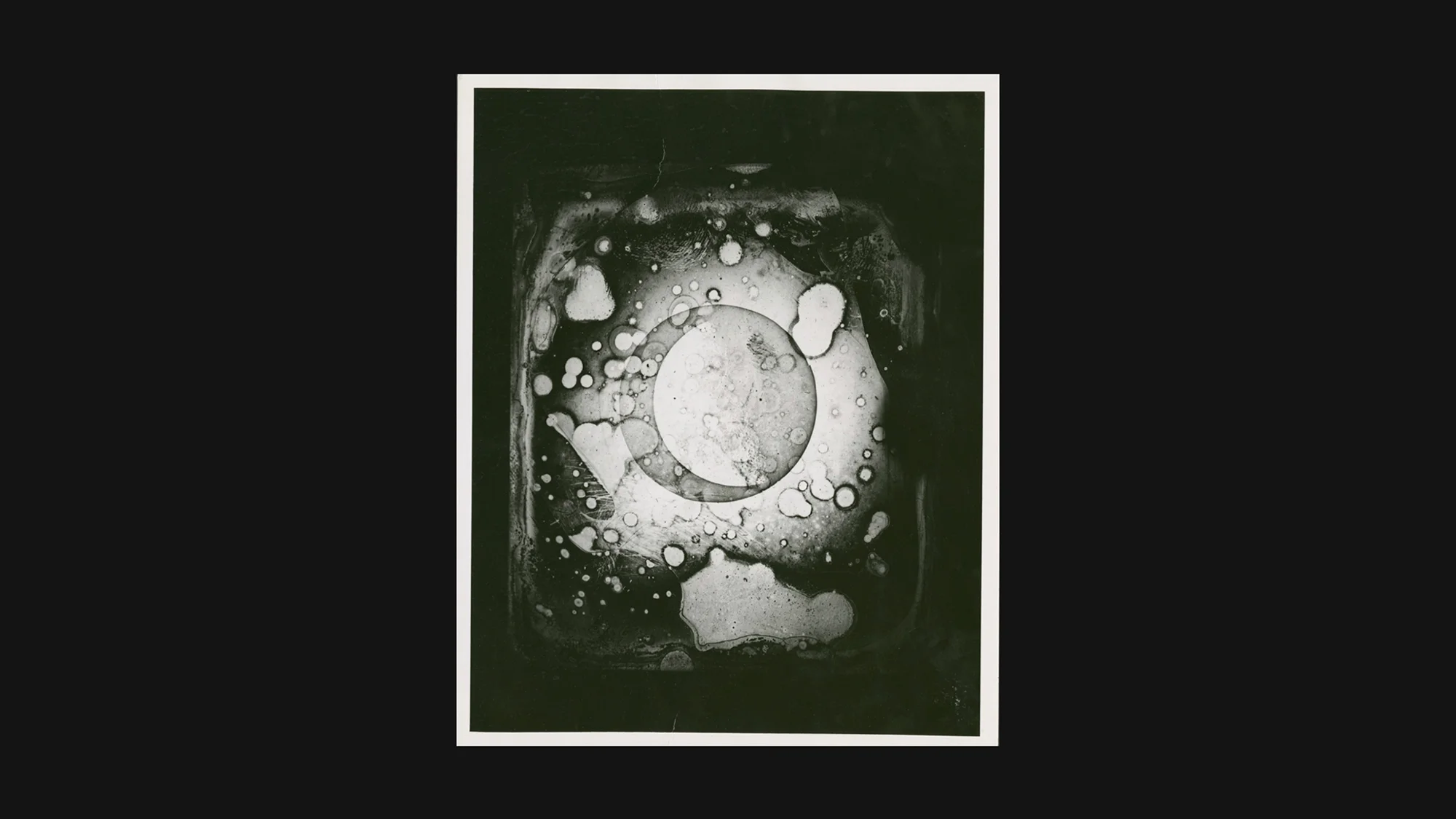
Draper’s 1840 moon photograph and the beginning of Astrophotography.
In 1840, John Draper's pioneering daguerreotype of the Moon opened new horizons in astrophotography, producing the earliest surviving photograph of an astronomical body. Draper’s technique used a silver-plated copper sheet sensitised with iodine vapour to create a light-sensitive surface, allowing the Moon to be recorded photographically for the first time. Though modest in detail, the image demonstrated that photography could capture celestial bodies and preserve their appearance with objective accuracy.
This achievement was not only about the Moon; it helped shape the emerging role of photography in scientific investigation. Draper’s success encouraged further improvements in photographic techniques and materials, including faster exposure times and more refined chemical processes. These advances expanded photography’s function from simple documentation to a valuable scientific instrument, contributing to astronomy and other fields by enabling the accurate recording and study of fine details and phenomena beyond the limits of direct observation.
FROM THE COLLECTION
A close reading of the technique, the context, and what this image establishes as a Point Zero. Read the essay.
KEY REFERENCE POINTS
TECHNICAL: Daguerreotype process・silver-plated copper, iodine vapour sensitisation・733×903px surviving digital scan・26 March 1840・NYU rooftop observatory・single exposure, manual tracking
INFLUENCE: Earliest surviving astronomical photograph・launched astrophotography as a discipline・demonstrated photography as scientific instrument・preceded systematic celestial imaging by decades
ANALYTICAL: Proof that photography could resolve lunar surface detail・opened observational astronomy beyond the human eye・established exposure and tracking principles for celestial work
CULTURAL IMPACT: Photography crosses into science・vision of the Moon as document, not just symbol・anchor moment for image-based discovery・held at NYU Special Collections, Draper Family Collection
ARCHIVAL RECORD
CREDIT: John William Draper, Public domain, via Wikimedia Commons
AUTHOR: John William Draper (1811–1882)
TITLE: Unknown
DATE: 26 March 1840
ARCHIVE: New York University Archives, Special Collections, Draper Family Collection
SOURCE: Wikimedia Commons
ORIGINAL: 733 x 903 pixels, file size: 391 KB, MIME type: image/jpeg
AVAILABLE INFORMATION: Earliest surviving astronomical photograph. Daguerreotype taken on 26 March 1840 from the rooftop observatory at the University of the City of New York, Washington Square, New York.
EXTENDED CONTEXT
Earliest Surviving Photograph of the Moon, John William Draper, 26 March 1840: daguerreotype, silver-plated copper sheet sensitised with iodine vapour, approximately 25 mm diameter on the original plate, 45-minute exposure, rooftop observatory, University of the City of New York, Washington Square, New York.
Three versions of this image are held in the Zero Baseline collection, each with a distinct provenance referencing the article Earth’s Moon (1840) by Dan Streible, published February 21, 2021.
Left: NYU Photo Bureau copy, made on 18 January 1962 from the original damaged daguerreotype discovered in 1961 in a little-used room in the attic of Gould Memorial Library, NYU University Heights campus. Centre: Smithsonian Institution colour restoration, catalogue number 319,990. Stabilised and clarified from the recovered original. Right: John William Draper, Moon, Metropolitan Museum of Art. Orientation disputed: whether the Met version replicates the natural mirror-reversal of the daguerreotype process, reflects how the physical print was displayed, or is simply presented upside down remains an open question.
All three images derive from the same physical daguerreotype plate. Each is a later reproduction of the damaged original object, and the question of which version most closely reflects Draper’s 1840 exposure has yet to be resolved.
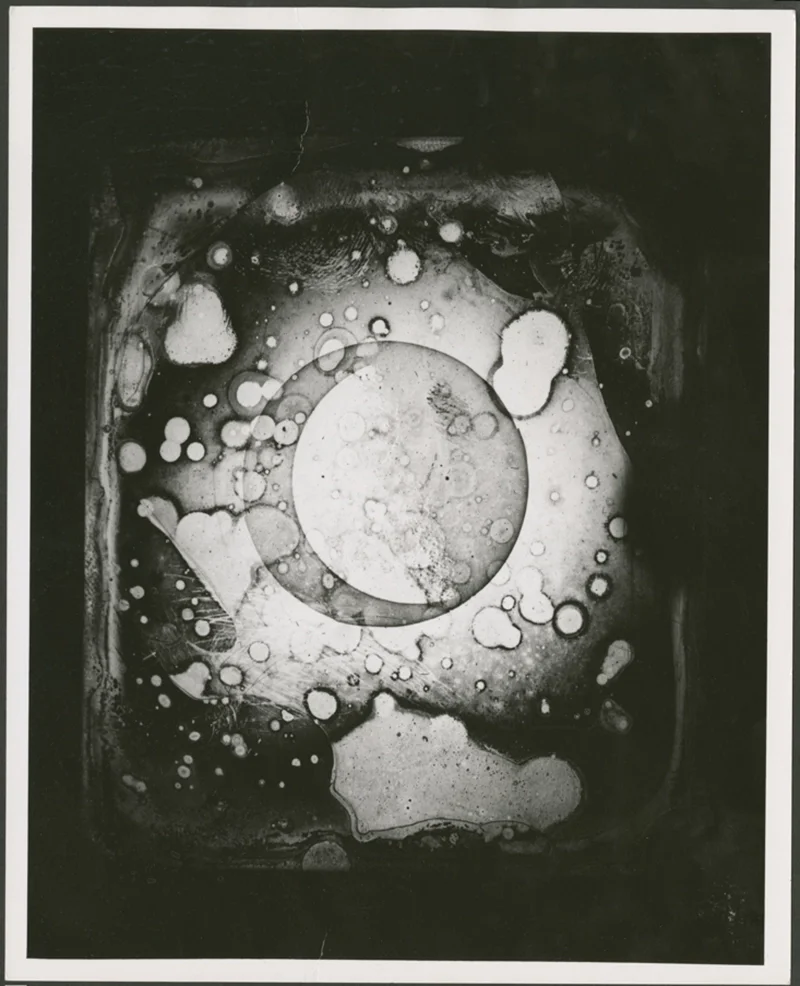
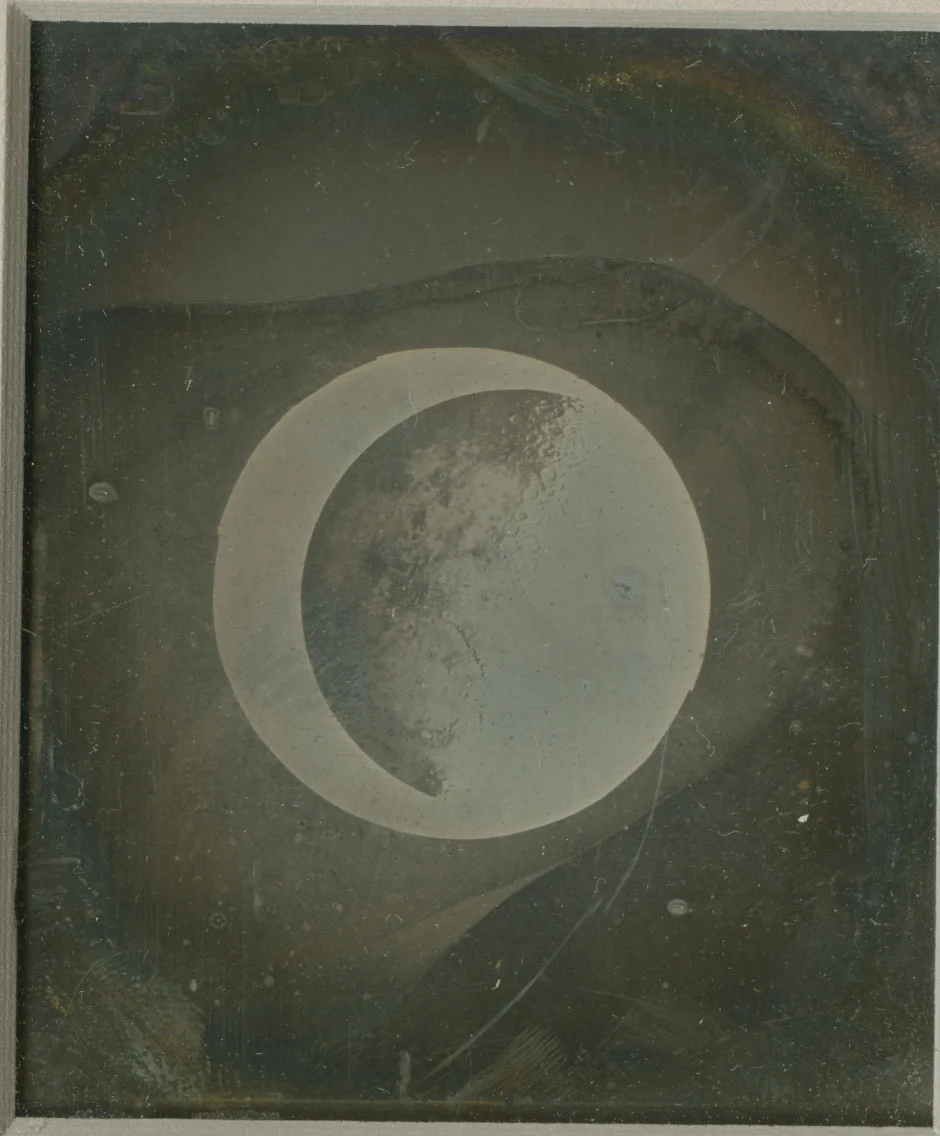
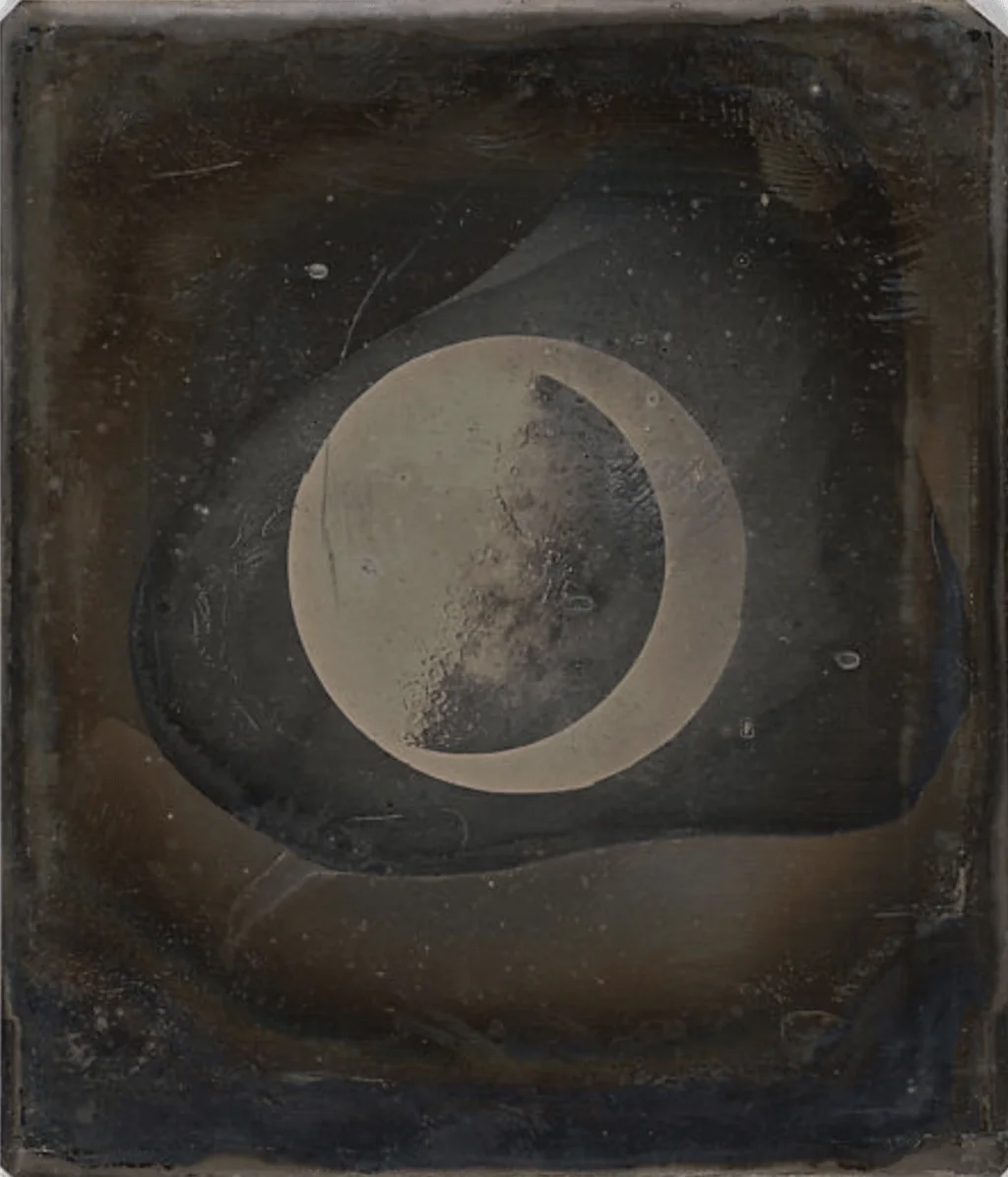
Image Credits (left to right): Image 1: John William Draper, Moon, 26 March 1840. NYU Photo Bureau copy, 18 January 1962, made from the damaged daguerreotype discovered in 1961 in the attic of Gould Memorial Library, NYU University Heights campus. Original object: New York University Archives, Special Collections — Draper Family Collection. Image 2: John William Draper, Moon, 26 March 1840. Colour photograph of the Draper daguerreotype restored by the Smithsonian Institution (catalogue number 319,990). New York University Archives. Source: Dan Streible, Earth’s Moon (1840), February 21, 2021. Image 3: John William Draper, Moon, 26 March 1840. Metropolitan Museum of Art version. Source: Dan Streible, Earth’s Moon (1840), February 21, 2021.
Exploring the Influence of Establishing Photography as a Medium across Zero Baseline
Photography’s earliest milestones established its very possibility as a medium. These foundational firsts secured permanence, enabled reproduction, expanded into scientific observation, and entered the circulation of published knowledge. In doing so, they demonstrated that photography could move beyond isolated experiments. Together, they defined the framework for the medium to grow and endure—forever changing what we are able to see, and how seeing it shapes our thinking.
1827 JOSEPH NICÉPHORE NIÉPCE – FIRST PERMANENT PHOTOGRAPH
Produced the first stable image on a pewter plate, proving that light-sensitive chemistry could fix a visual record permanently.
1835 WILLIAM HENRY FOX TALBOT – FIRST NEGATIVE
Created the earliest surviving paper negative, introducing a process that allowed multiple prints from a single image and establishing photography as a reproducible system.
1837 LOUIS DAGUERRE – FIRST SURVIVING DAGUERREOTYPE
Produced Still Life in Studio, a positive, unique image of remarkable clarity that proved photography could capture and share the visible world with a fidelity beyond drawing.
1840 JOHN DRAPER – EARLIEST IMAGE OF THE MOON
Captured the Moon with a daguerreotype, extending photography beyond Earth and positioning it as a tool for astronomical research and scientific discovery.
1843 ANNA ATKINS – FIRST BOOK OF PHOTOGRAMS
Published Photographs of British Algae: Cyanotype Impressions, the first book illustrated with photographic images, demonstrating photography’s capacity for cataloguing and knowledge dissemination.