1835
First Negative
William Henry Fox Talbot
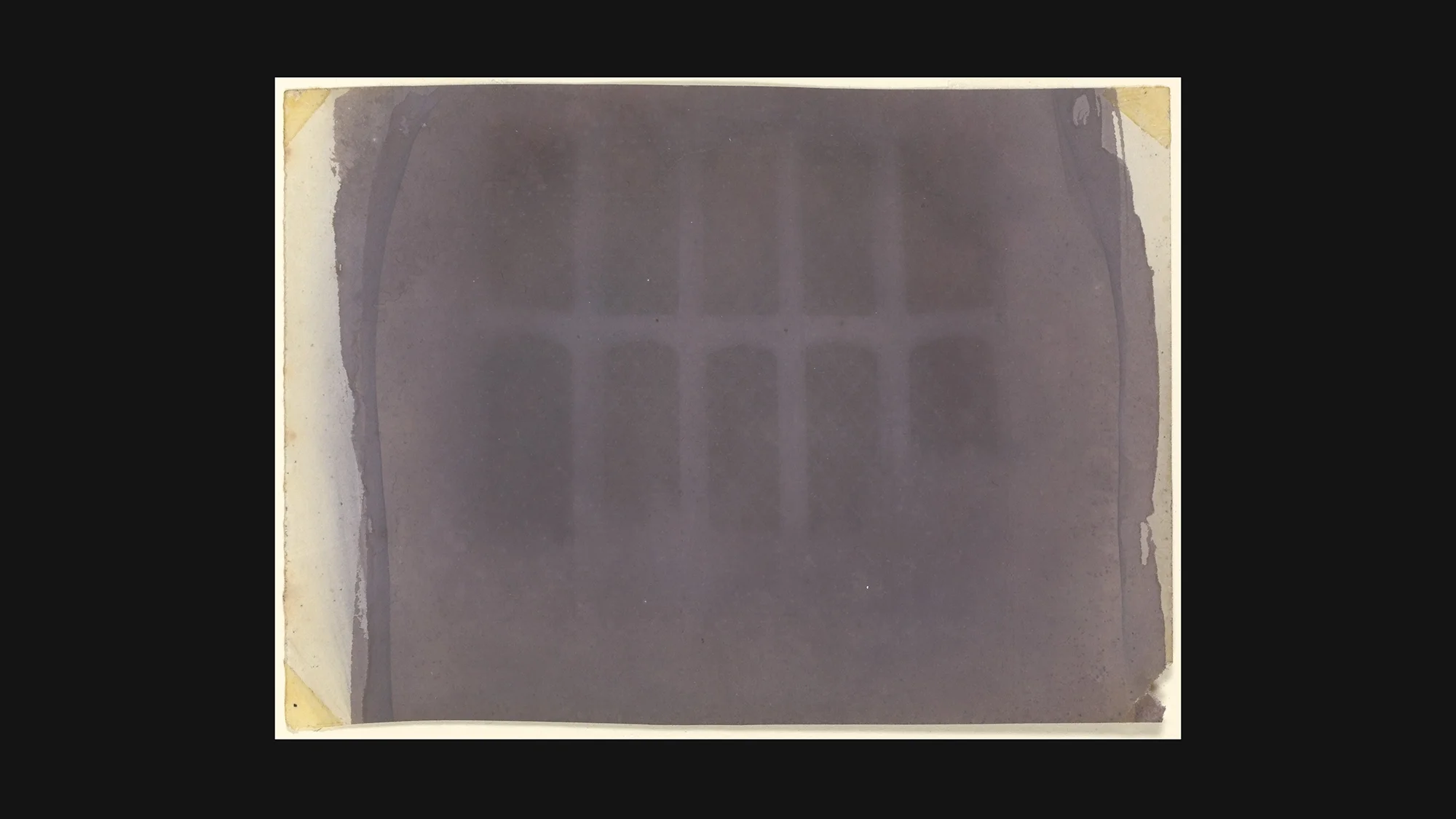
Talbot's photogenic drawing process revolutionised photography by introducing reproducible negatives.
The introduction of William Henry Fox Talbot's photogenic drawing process marks a transformative era in photography, pioneering the use of negatives to produce multiple positives. This innovation contrasted sharply with the non-reproducible daguerreotype, ushering in an age where photography could be widely disseminated, laying the groundwork for modern visual media and photographic archiving.
Employing paper treated with silver chloride and exposed in a camera obscura, Talbot’s technique allowed meticulous control over exposure and development, emphasising photography's dual artistic and technical strength.
These advancements had lasting implications, influencing subsequent photographic technologies including sensitive emulsions and glass plate negatives, precursors to contemporary film. Talbot's photogenic drawings, featuring delicate objects like leaves and lace, not only captured minute details but also underscored the medium's utility in scientific documentation.
KEY REFERENCE POINTS
TECHNICAL: Paper negative on silver chloride-treated sheet・8.5 × 11.6 cm, irregularly trimmed・camera obscura exposure・tonal reversal captures window light・no fixing agent yet – term "negative" not yet coined・precursor to calotype process
INFLUENCE: First reproducible photographic negative・direct counter to non-reproducible daguerreotype・foundation for glass plate negatives and film emulsions・held in Met Museum Rubel Collection (Acc. 1997.382.1)・Public Domain / Open Access
ANALYTICAL: Tonal inversion as unintended discovery・silver chloride darkening proportional to light intensity・establishes negative-positive logic underpinning all analogue photography・demonstrates photographic process as
CULTURAL IMPACT: Shifts photography from singular object to reproducible medium・enables mass dissemination of images・seeds photographic archiving and publishing・Lacock Abbey as origin site of modern visual culture
ARCHIVAL RECORD
CREDIT: Metropolitan Museum of Art, The Rubel Collection
AUTHOR: William Henry Fox Talbot
TITLE: The Oriel Window, South Gallery, Lacock Abbey
DATE: probably 1835
ARCHIVE: Metropolitan Museum of Art, The Rubel Collection, Purchase, Ann Tenenbaum and Thomas H. Lee and Anonymous Gifts, 1997
SOURCE: Metropolitan Museum of Art, Accession Number: 1997.382.1, Public Domain, Open Access API
ORIGINAL: Paper negative
DESCRIPTION: Sheet 8.5 × 11.6 cm (3 3/8 × 4 9/16 in.), irregularly trimmed
AVAILABLE INFORMATION: The image is tonally reversed—a negative, though the term did not yet exist—as the paper darkened most where it recorded the bright light of the windows.
EXTENDED CONTEXT
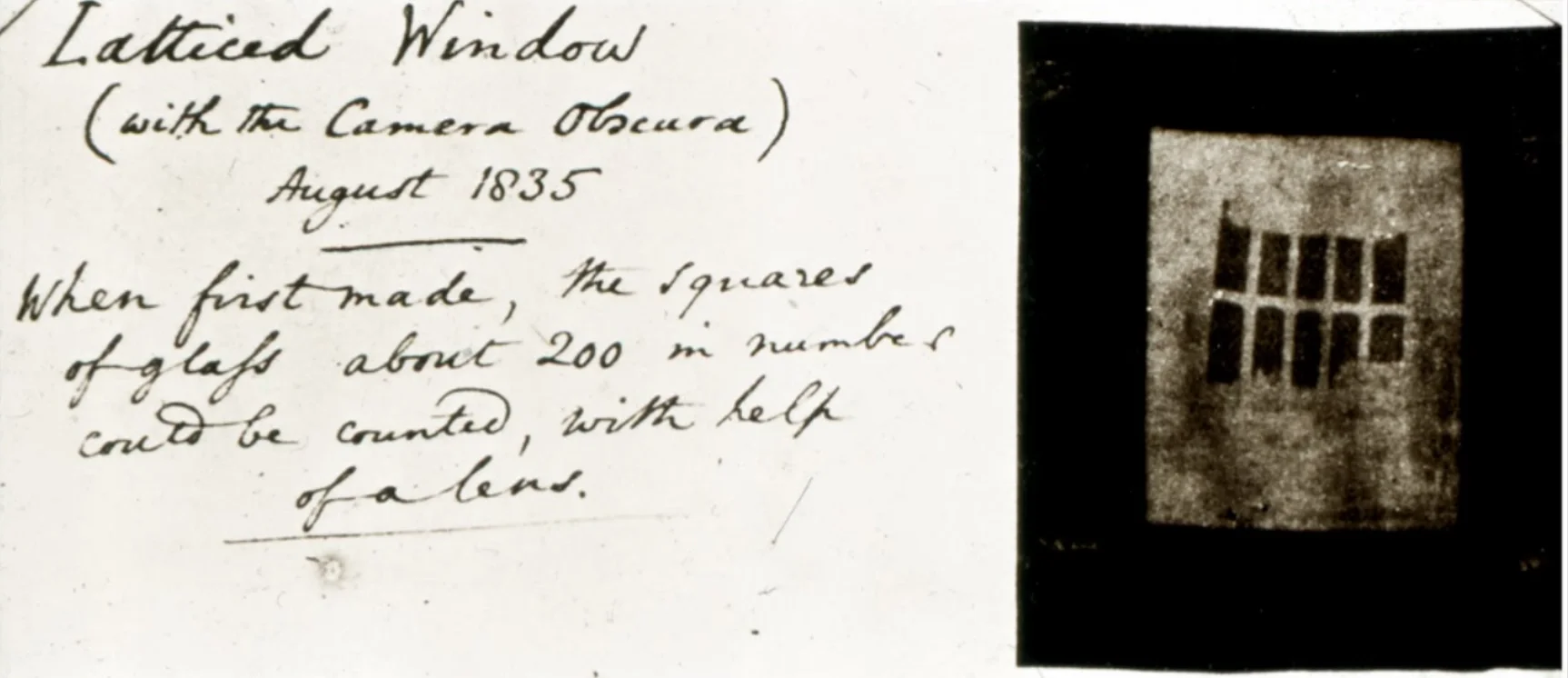
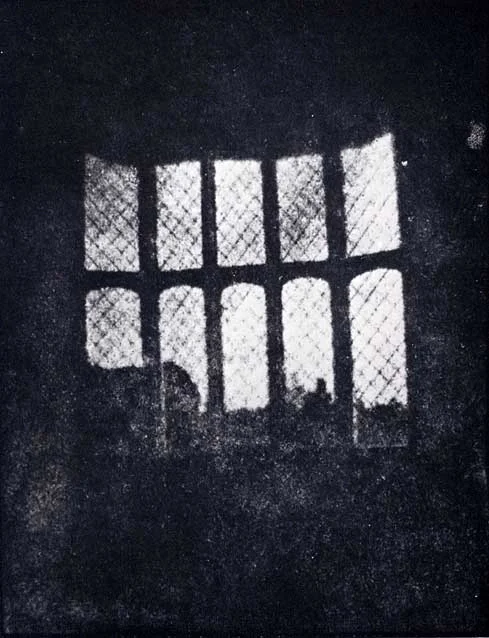
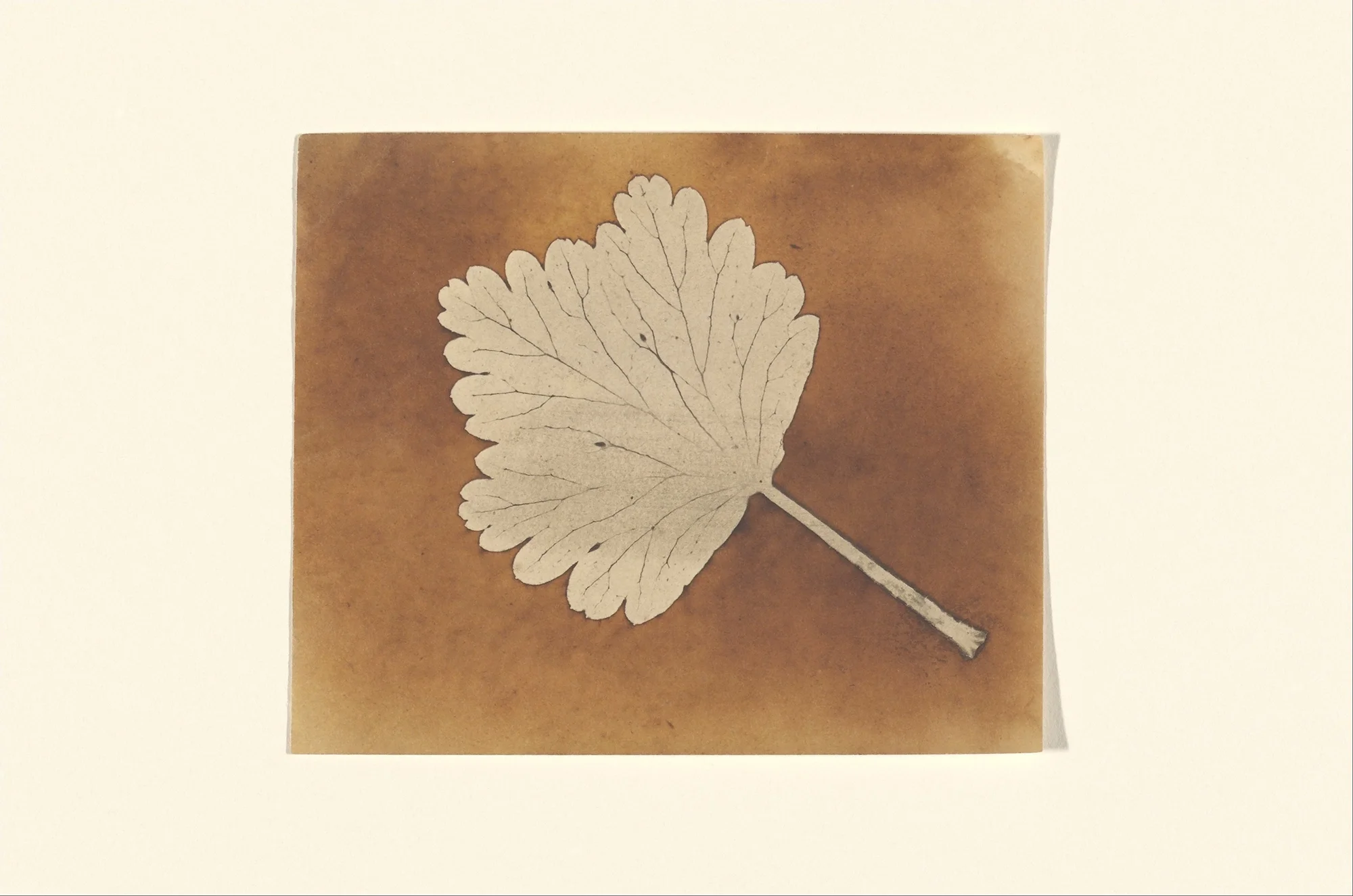
Image credits from left: William Henry Fox Talbot, Public domain, via Wikimedia Commons, Talbot, Latticed window, Lacock Abbey. The first negative. 1835. Image credit middle: William Fox Talbot (1800-1877), Public domain, via Wikimedia Commons, Window in the South Gallery of Lacock Abbey made from the oldest photographic negative in existence. Image credit right: Metropolitan Museum of Art, Gilman Collection, Purchase, Joseph M. Cohen Gift, 2005, Accession Number: 2005.100.725, Public Domain, Open Access API, William Henry Fox Talbot, ca. 1840, Salted paper print negative.
Exploring the Influence of Establishing Photography as a Medium across Zero Baseline
Photography’s earliest milestones established its very possibility as a medium. These foundational firsts secured permanence, enabled reproduction, expanded into scientific observation, and entered the circulation of published knowledge. In doing so, they demonstrated that photography could move beyond isolated experiments. Together, they defined the framework for the medium to grow and endure—forever changing what we are able to see, and how seeing it shapes our thinking.
1827 JOSEPH NICÉPHORE NIÉPCE – FIRST PERMANENT PHOTOGRAPH
Produced the first stable image on a pewter plate, proving that light-sensitive chemistry could fix a visual record permanently.
1835 WILLIAM HENRY FOX TALBOT – FIRST NEGATIVE
Created the earliest surviving paper negative, introducing a process that allowed multiple prints from a single image and establishing photography as a reproducible system.
1837 LOUIS DAGUERRE – FIRST SURVIVING DAGUERREOTYPE
Produced Still Life in Studio, a positive, unique image of remarkable clarity that proved photography could capture and share the visible world with a fidelity beyond drawing.
1840 JOHN DRAPER – EARLIEST IMAGE OF THE MOON
Captured the Moon with a daguerreotype, extending photography beyond Earth and positioning it as a tool for astronomical research and scientific discovery.
1843 ANNA ATKINS – FIRST BOOK OF PHOTOGRAMS
Published Photographs of British Algae: Cyanotype Impressions, the first book illustrated with photographic images, demonstrating photography’s capacity for cataloguing and knowledge dissemination.