1968
Earthrise
William A. Anders, Apollo 8, NASA
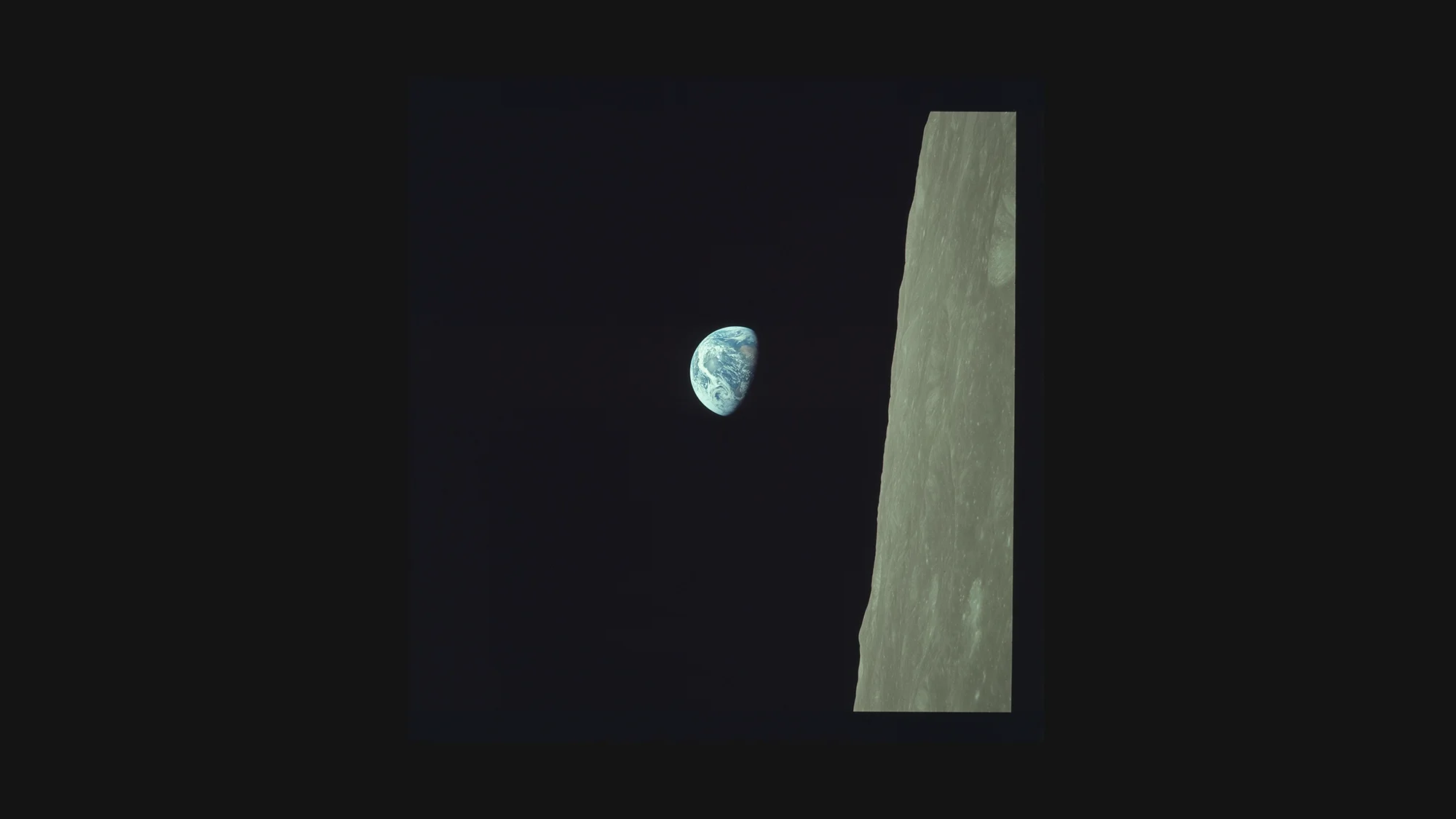
“Earthrise,” a snapshot that redefined our perception of the planet.
The iconic 'Earthrise' image captured by Apollo 8 redefined our view of Earth, encapsulating its vulnerability and beauty in a single, striking frame. This photograph captured the first colour view of Earth rising above the lunar horizon. It not only expanded the boundaries of human perception by showcasing Earth's isolation and fragile beauty, but also underscored the profound interconnectedness of all humanity.
The photograph, was taken with a specially modified Hasselblad 500EL camera, with a Zeiss lens and custom Ektachrome film. These technical adaptations facilitated the ability to capture this ‘snapshot’ in challenging conditions. "Earthrise" continues to inspire a global dialogue about stewardship and the urgency of sustainable practices, demonstrating the enduring impact of a single photograph on both technology and culture.
KEY REFERENCE POINTS
TECHNICAL: Hasselblad 500EL modified for spaceflight・Zeiss lens・custom Ektachrome film・4400×4600px original・film magazine 14/B・handheld capture, lunar orbit
INFLUENCE: First colour photograph of Earth from lunar orbit・catalyst for Earth Day 1970・environmental movement ignition・NASA Apollo Archive, public domain
ANALYTICAL: Whole-Earth view・isolation and scale of planet visible for first time・colour fidelity critical to emotional impact・unplanned shot, rotated camera orientation
CULTURAL IMPACT: "Earthrise" as ecological symbol・shift from space race to planetary awareness・one of most reproduced photographs in history・redefined human self-perception
ARCHIVAL RECORD
CREDIT: Project Apollo Archive, Public domain, via Wikimedia Commons
AUTHOR: Anders, W. A. (1968), Apollo 8, NASA
TITLE: Earthrise
DATE: 1968
ARCHIVE: NASA, Apollo Archive
SOURCE: Wikimedia Commons
ORIGINAL: 4400 x 4600 pixels, file size: 1.94 MB, MIME type: image/jpeg
AVAILABLE INFORMATION: Apollo 8 Hasselblad image from film magazine 14/B - Lunar Orbit, Trans-Earth Coast
EXTENDED CONTEXT
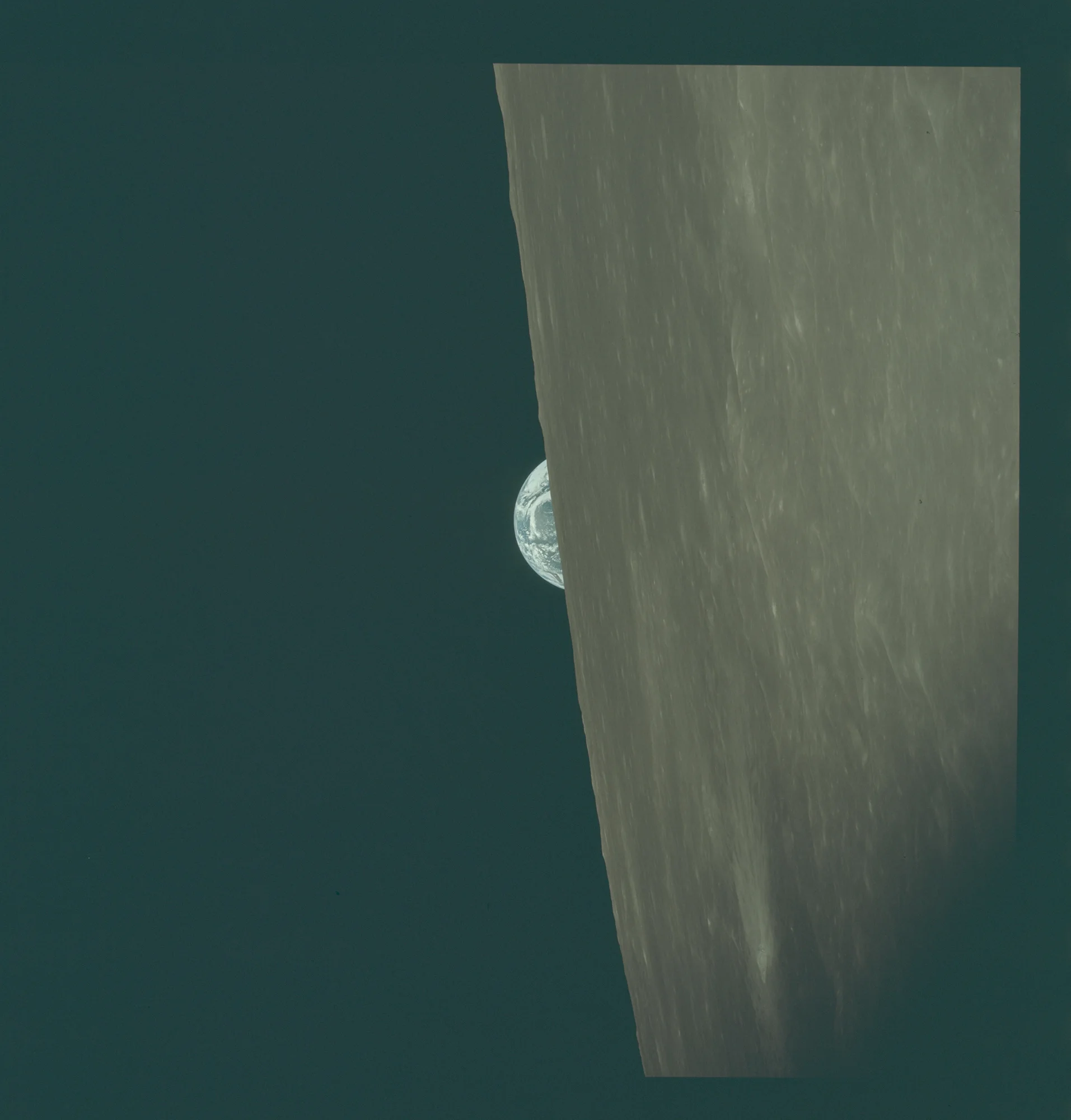
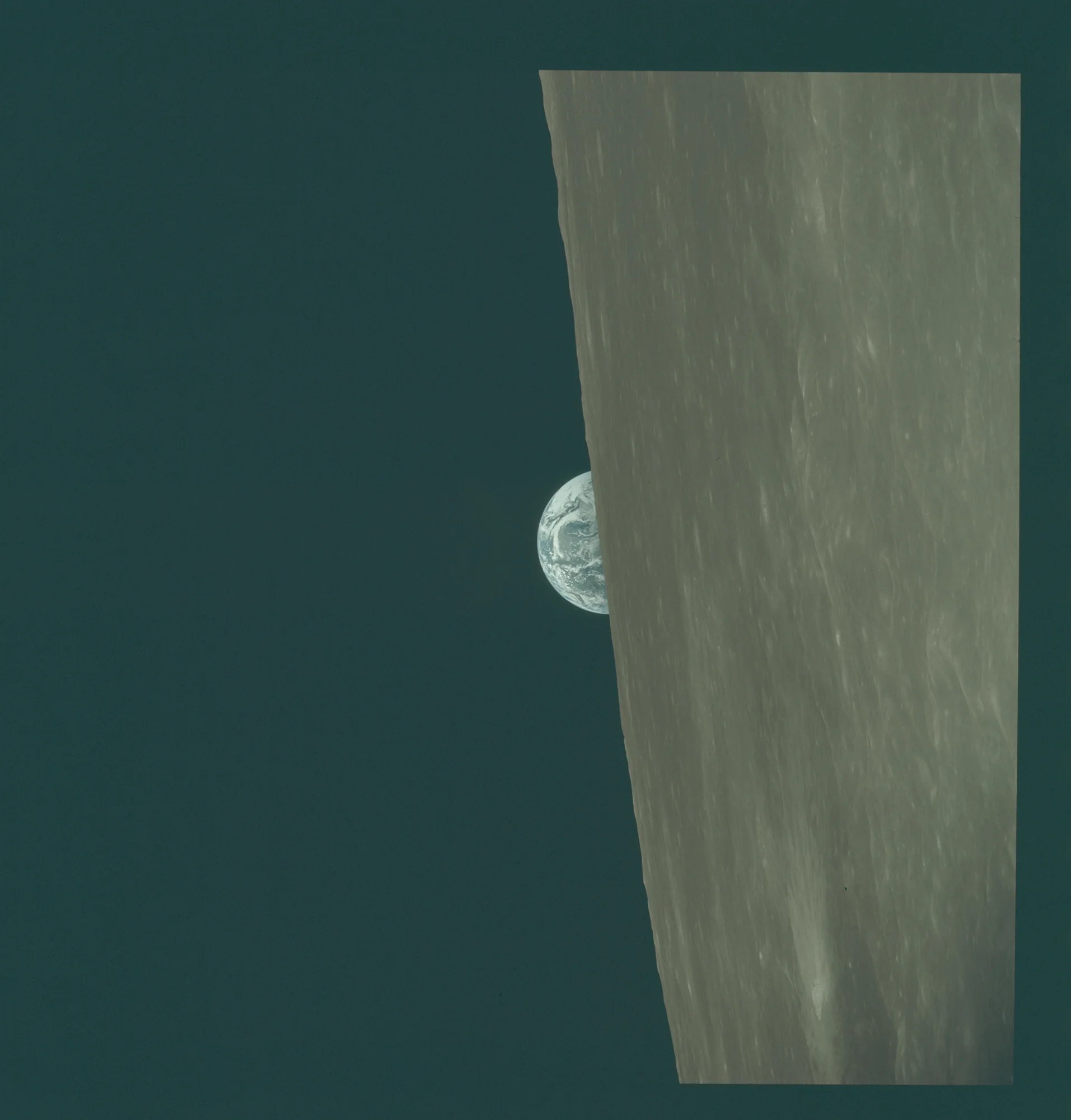
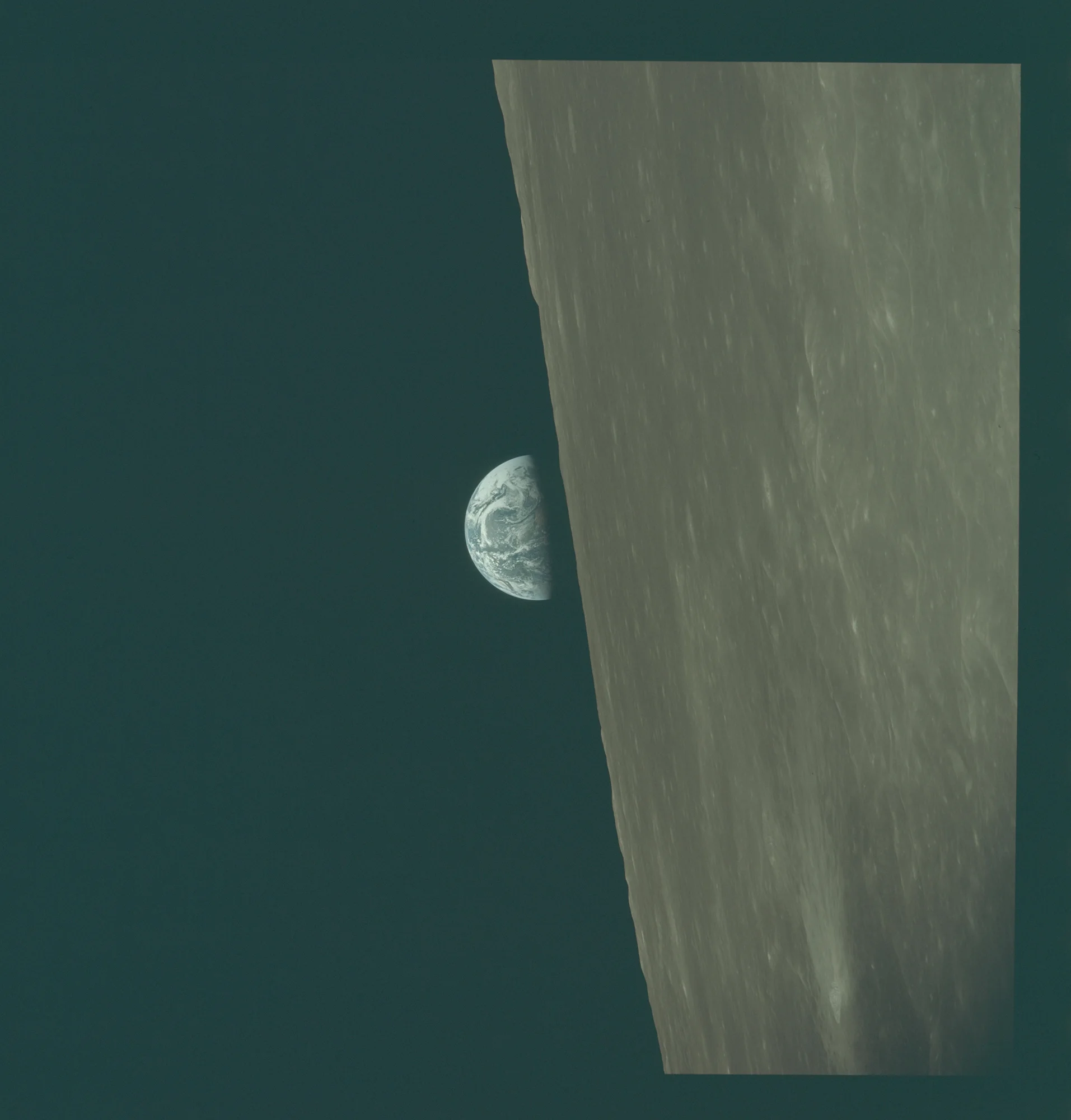
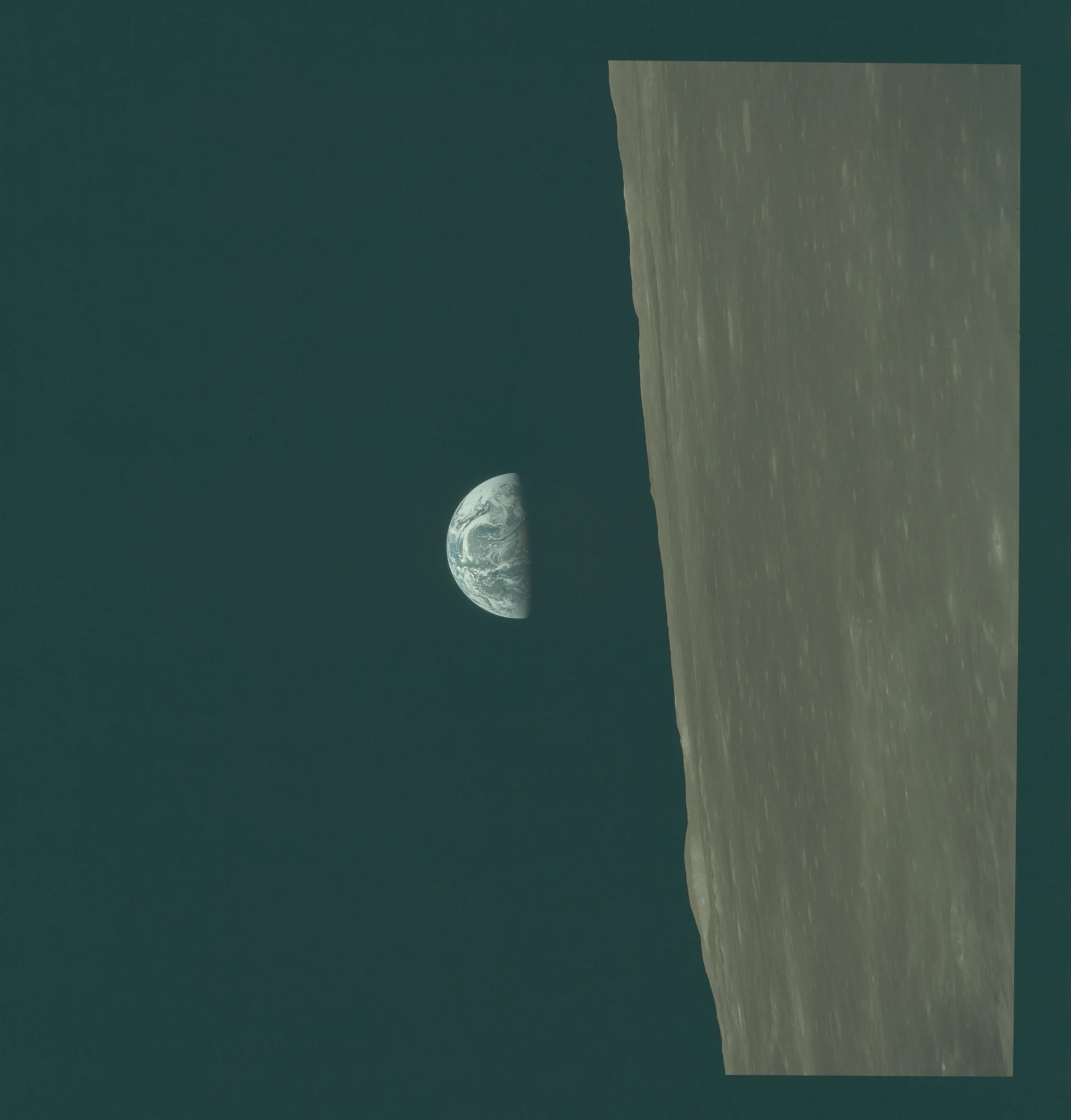
Image credits additional negatives from the same roll of film (left to right):
Anders, W.A. (1968). Earthrise — Apollo 8 Lunar Orbit, Trans-Earth Coast. NASA/Project Apollo Archive, public domain, via Wikimedia Commons: Hasselblad image AS10-27-3885_21904534885 from film magazine 14/B, Hasselblad image AS10-27-3887_21283405123 from film magazine 14/B, Hasselblad image AS10-27-3890_21716695748 from film magazine 14/B, Hasselblad image AS10-27-3895_21283403543 from film magazine 14/B
Exploring the Influence of Camera in Motion across Zero Baseline
Placing the camera on a moving platform—whether mechanical, animal, or environmental—transforms both perspective and possibility. From early aerial surveys and pigeon-mounted cameras to systems carried on vehicles, vessels, or spacecraft, each method redefines the relationship between subject and vantage point. Motion can be intentional—tracking a subject in real time—or incidental, shaped by the path of the carrier itself. Techniques such as gyro-stabilisation, vibration isolation, and remote triggering ensure clarity despite continuous movement. By combining stability with adaptive navigation, camera-in-motion photography expands the scope of what can be recorded, offering views and contexts inaccessible from a fixed position.
1908 JULIUS NEUBRONNER – AERIAL PHOTOGRAPH FROM A HOMING PIGEON
Produced bird’s-eye views with miniature cameras strapped to homing pigeons, pioneering aerial perspectives from a living platform.
1968 WILLIAM A. ANDERS – EARTHRISE
Captured humanity’s first view of Earth rising above the lunar horizon, a perspective only possible from orbit around another world.
1990 PALE BLUE DOT
Recorded by Voyager 1 from the edge of the Solar System, showing Earth as a distant speck and redefining our cosmic perspective.
1995 ROBERT WILLIAMS AND THE HUBBLE DEEP FIELD
Directed the Earth-orbiting Hubble Space Telescope toward a seemingly empty patch of sky, revealing thousands of distant galaxies and expanding the observable universe.
2018 FIRST PHOTO INSIDE SUN CORONA
Returned the first images taken from the Parker Solar Probe within the Sun’s corona, capturing its outer atmosphere from a probe in close solar orbit.
2022 JAMES WEBB TELESCOPE - COSMIC CLIFFS
Used infrared imaging to reveal intricate star-forming regions in the Carina Nebula, opening a new era of space-based observation.