2019
First Image of a Black Hole
Event Horizon Telescope
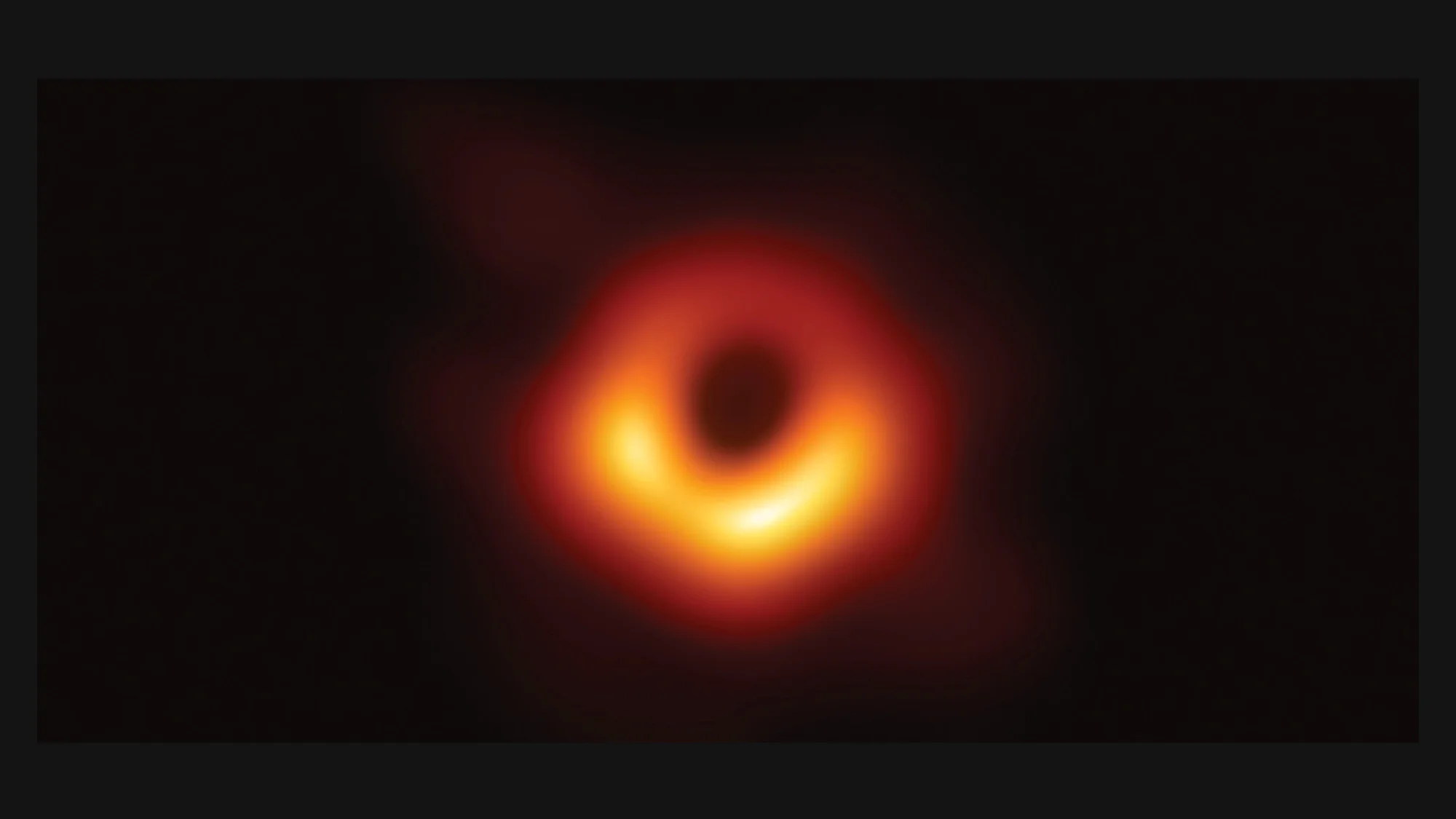
The revolutionary first image of a black hole is a testament to global collaboration and technological innovation in photography.
The first-ever image of a black hole, captured by the Event Horizon Telescope (EHT) in April 2017 and released on 10 April 2019, marks a revolutionary moment in the history of photography. This historic achievement was made possible by synthesising data from radio frequencies collected by a globally coordinated array of telescopes. The EHT image unveiled the black hole's shadow against the glowing gas orbiting it, confirming theoretical physics and providing the first direct visual proof of such celestial phenomena.
This technological feat required the precise synchronisation of eight radio telescopes around the world, integrating vast data sets to produce a singular, coherent image. This method not only advances photographic techniques but also sets new benchmarks for global scientific collaboration, paving the way for future astronomical endeavours. The impact of this image transcends the realms of art and science, standing as a testament to human ingenuity, announcing a new era in the exploration of the universe.
KEY REFERENCE POINTS
TECHNICAL: 8 synchronized radio telescopes worldwide・virtual Earth-sized aperture・radio frequency data synthesis・7,416 × 4,320px JPEG・2.39 MB source file・petabytes of raw data processed
INFLUENCE: First direct visual evidence of a black hole・confirms Einstein's general relativity・EHT collaboration spanning 6 continents・published 10 April 2019・CC BY 4.0 open license
ANALYTICAL: Shadow cast by M87* black hole event horizon・accretion disk luminosity contrast・interferometric imaging technique・validates theoretical black hole models
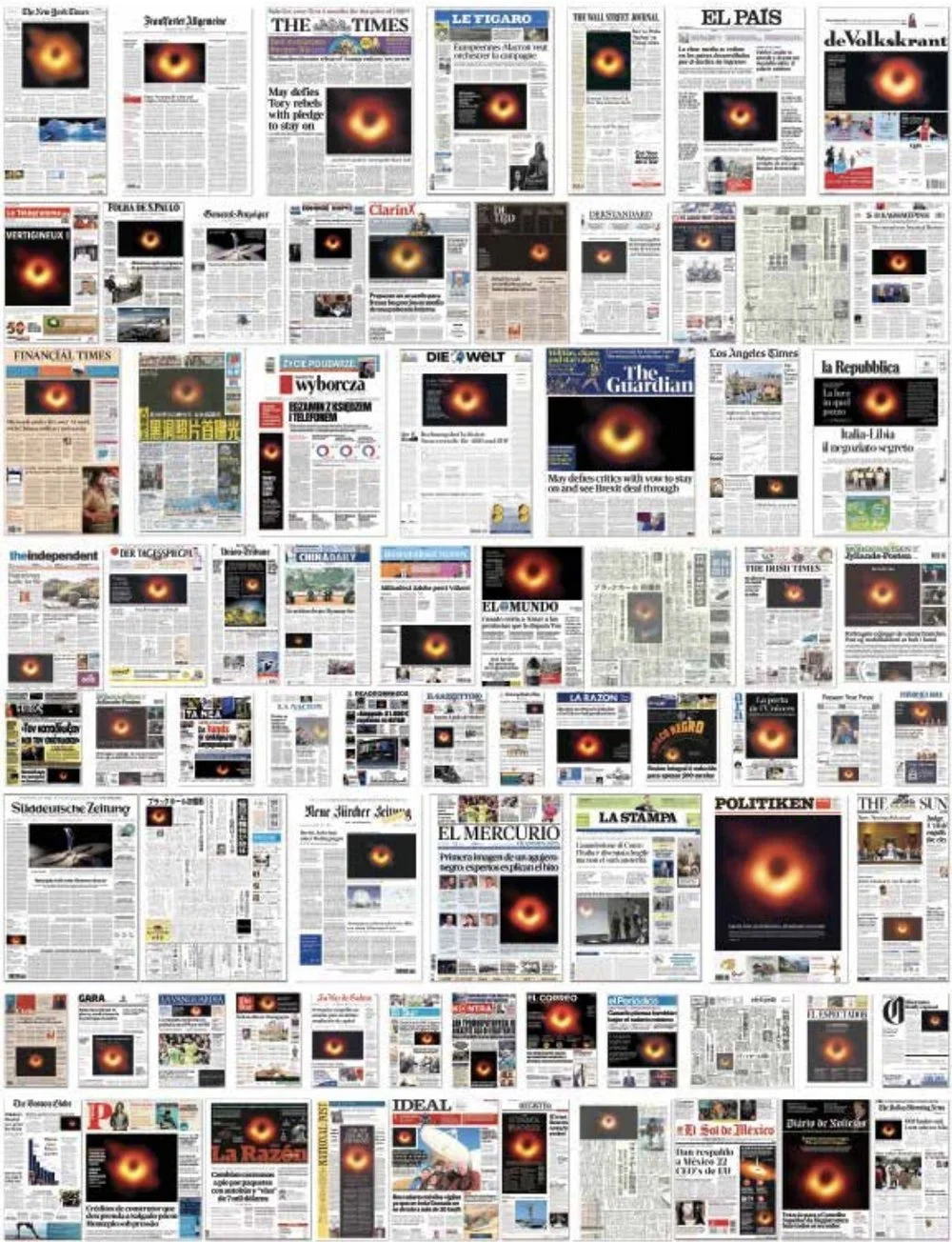
CULTURAL IMPACT: Global front-page moment across 100+ countries・symbol of collective human scientific reach・redefines limits of observational photography・new benchmark for international research collaboration
ARCHIVAL RECORD
CREDIT: Event Horizon Telescope, CC BY 4.0, via Wikimedia Commons
AUTHOR: Event Horizon Telescope
TITLE: Astronomers Capture the First Image of a Black Hole
DATE: 2019
ARCHIVE: Event Horizon Telescope
SOURCE: Wikimedia Commons
ORIGINAL: 7,416 x 4,320 pixels, file size: 2.39 MB, MIME type: image/jpeg
AVAILABLE INFORMATION: Press Release (10 April 2019): First-ever Image of a Black Hole Captured. (n.d.)
EXTENDED CONTEXT
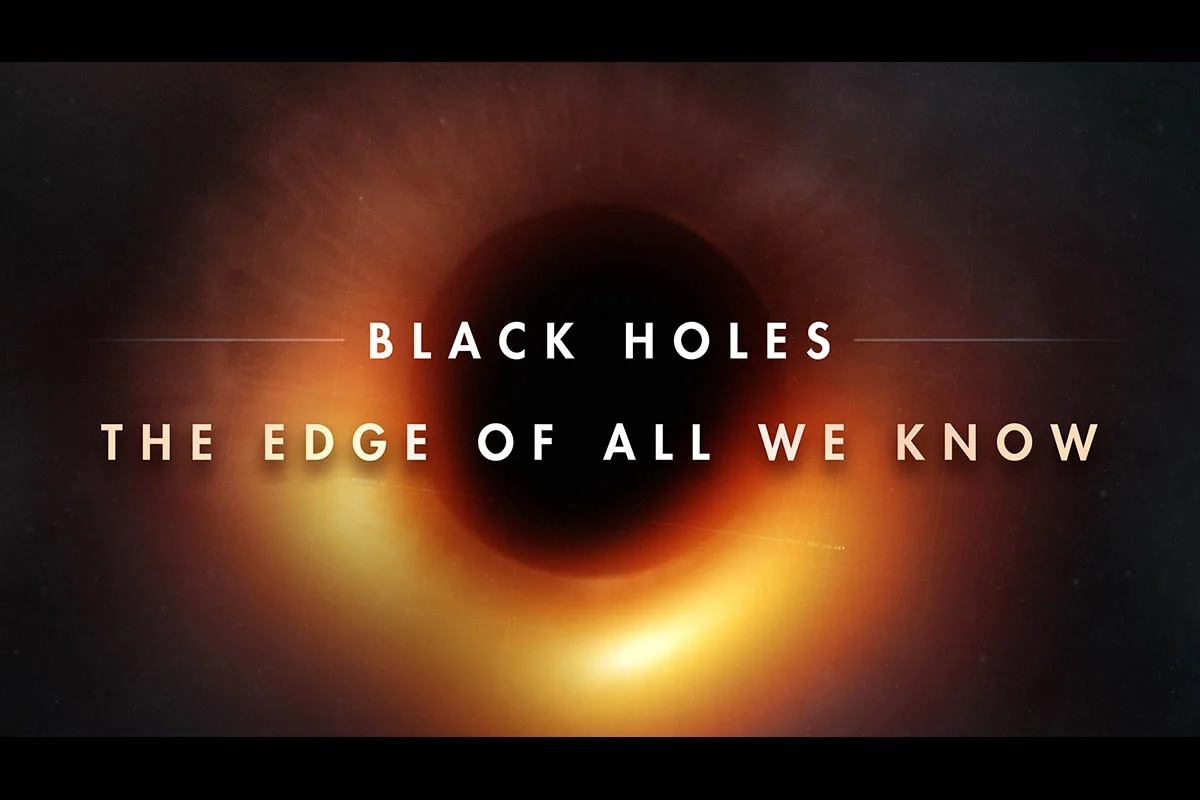
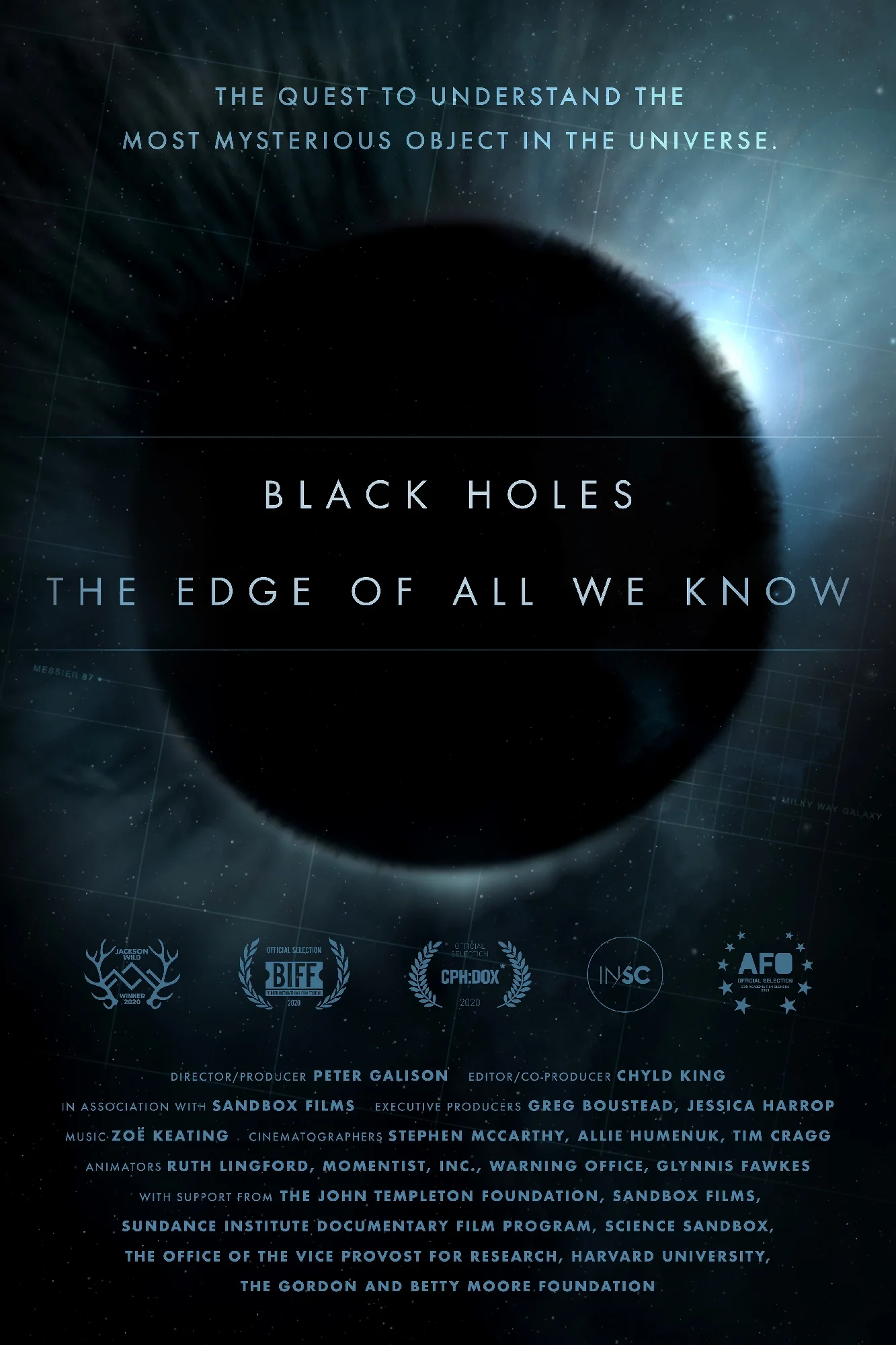
Streaming on Netflix and Apple TV: "Black Holes | The Edge of All We Know"
A documentary film following the quest to understand the most mysterious objects in the Universe. Image Credit: © 2019 collapsar, www.blackholefilm.com, Director/Producer: Peter Galison, Editor/Co-Producer: Chyld King, Distribution: Submarine Entertainment. (runtime: 98 min).
Twitter post May 7. 2021 Event Horizon 'Scope@ehtelescope
“Across the globe, newspapers touted the scientific achievement of capturing the first image of a black hole. Over four billion people are estimated to have seen this historic image!” Image Credit: Eduardo Ros. #news #ScienceIsAwesome https://twitter.com/ehtelescope
Exploring the Influence of Discovery and Proof in Physics across Zero Baseline
Photography has long served as both a revealer of the unknown and a confirmer of scientific predictions. From the unexpected discovery of radiation and X-rays to the visual proof of electromagnetic waves, subatomic particles, and astrophysical phenomena, images have extended scientific vision beyond human senses. Advances in detection methods, exposure control, and imaging media have made it possible to record events once hidden, turning abstract equations into visible traces and serendipitous discoveries into new fields of physics. In doing so, photography has both revealed new phenomena and reinforced theoretical models, enabling further optical investigation alongside simulation and data modelling—together expanding our ability to explore and understand the natural world.
1887 ERNST MACH – BRASS BULLET
Visualised shock waves from supersonic motion, confirming theoretical models of fluid dynamics. (Confirmation)
1895 RÖNTGEN – FIRST X-RAY
The first radiographic image, revealing bones and flesh through invisible rays, opening medical imaging and a new field of physics. (Discovery)
1896 HENRI BECQUEREL – DISCOVERY OF RADIATION
Photographic plates revealed the existence of natural radioactivity, later foundational for atomic physics. (Discovery)
1932 CARL D. ANDERSON – CLOUD CHAMBER FIRST POSITRON
Captured the first photographic evidence of the positron, confirming Paul Dirac’s theoretical prediction of antimatter. (Confirmation)
1973 BUBBLE CHAMBER-CERN-EX-23296
Recorded spiralling tracks of particle interactions in a superheated liquid, supporting subatomic physics models with direct visual data. (Confirmation)
1981 CERN STREAMER CHAMBER
Visualised charged particle paths with greater clarity, confirming high-energy collision predictions. (Confirmation)
2015 LIGHT AS WAVE AND PARTICLE
Directly visualised light’s dual nature, confirming quantum theory predictions. (Confirmation)
2019 THE FIRST IMAGE OF A BLACK HOLE
Captured the shadow of a black hole’s event horizon in galaxy M87, providing visual confirmation of Einstein’s general relativity. (Confirmation)